SEO for tourism activities in the era of ChatGPT: what doesn't work anymore and what does
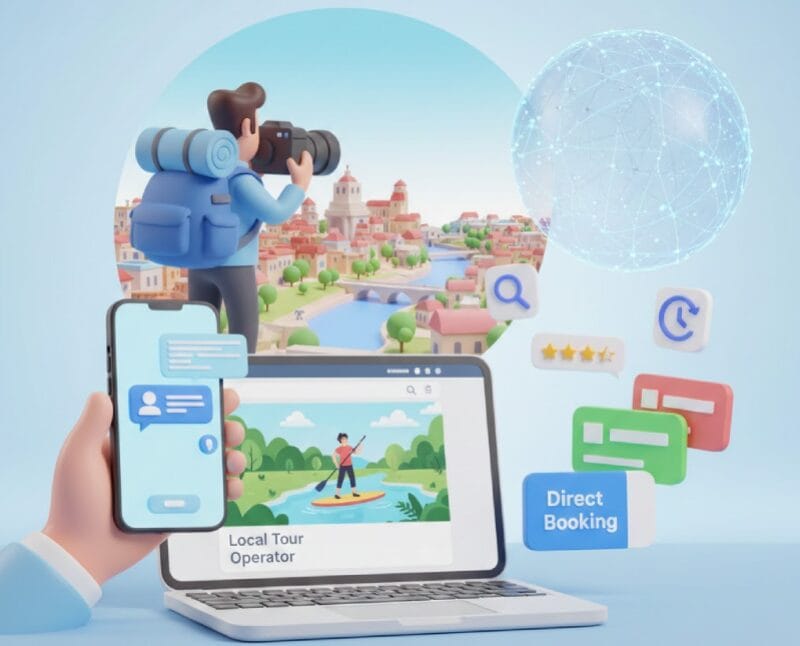
The cost of acquiring a new customer continues to rise. More expensive ads, increasingly aggressive OTAs and a traveller who compares everything before booking. Added to this is something new: many people no longer search on Google as they used to. Ask directly to ChatGPT, a Gemini or to mobile-integrated assistants.
Continue to do SEO as it was five years ago is no longer enough.
What is changing in organic search
For years, the game was simple: rank for a few keywords, get links and wait for traffic. Today, user behaviour is different.
Searches are longer, more conversational and many do not even generate a click. The user asks: “best free tour in Seville for families” and gets a direct answer from an AI.
This changes the rules for tour operators.
You no longer compete just to be on the front page. You compete to be the source that feeds these responses.
Why this matters if you sell experiences
When you rely on OTAs, you accept two things: high commissions and little direct relationship with the customer.
If organic traffic disappears or is diluted by automated responses, the risk is clear: more reliance on intermediaries and less margin.
The good news is that local operators have an advantage that the big platforms cannot always replicate: real, specific and up-to-date knowledge of the destination.
This is exactly what AIs are looking for in order to generate reliable answers.
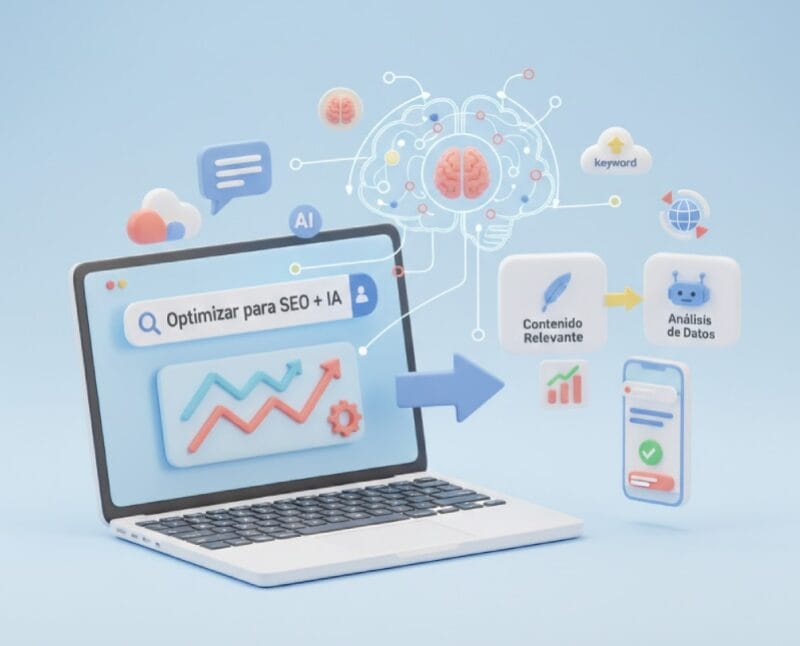
How to optimise for SEO + AI without technicalities
The approach is no longer “keywords”, is context and real authority.
First, create content that answers specific questions your customers ask you every week. Real timetables, meeting points, differences between tours, what happens if it rains, clear cancellation policies.
Second, structure that information cleanly. Clear pages, well organised text and consistent data between your website, Google Business Profile and other channels.
Third, keep the information alive. IAs prioritise sources that are updated and do not contradict what the user finds elsewhere.
This is where many fail: they publish once and don't touch the content again for years.
Anti-OTA strategies that work
Reducing dependence does not mean disappearing from the platforms, but balancing the weight. A well-designed website, with an integrated booking engine and always correct availability, allows you to convert informative traffic into direct bookings. If the user asks an AI and then arrives at your website, they cannot encounter slow forms, unclear payments or lack of trust. The key is to make the process as simple as with an OTA, but with a clear advantage: direct dealings and control of money.
Many operators find that when the system charges the customer directly and availability is automatically synchronised between channels, the leap to direct selling is much more natural.
Common mistakes in this new phase
A common one is to keep chasing volume rather than intent. Not all traffic is good if you don't book.
Another is to think that AI eliminates the need to SEO. In fact, it elevates it: mediocre content disappears sooner.
It is also a mistake to separate marketing and operations. If availability is not well managed or if there is overbooking, no visibility strategy will hold up.
How all this fits into the day-to-day business of the operator
Digital marketing is no longer just about attracting visitors. It's about closing the loop: visibility, trust and frictionless booking.
When your booking, payment and quota management system works together, you can focus on creating useful content and improving the customer experience.
That is what, in the medium term, makes you a reference for users... and for the AIs themselves who decide what to recommend.
The SEO is not dead. It has simply ceased to be a gimmick and has become a natural extension of how you run your business.