













The Real Problem: Same Prices All Year Round, Increasingly Tight Margins
Many tour operators in Spain continue to operate with a single fixed rate. It doesn’t matter if it’s August or November, Saturday or Tuesday, a full group or a half-empty one. The result is predictable: during peak season, money is left on the table, and during off-season, it’s hard to cover costs.
In recent years, this has begun to change. More and more companies in the sector are talking about smart pricing or revenue management. Not as a theoretical concept, but as a practical necessity for surviving with reasonable margins.
In fact, one in four operators already considers this strategy a priority looking ahead to 2026. And that’s no coincidence.
What Is Revenue Management
Revenue Management isn’t about raising prices just for the sake of it. It’s about selling the same product at different prices depending on the time, demand, and available capacity, with the goal of maximizing total revenue—not just filling seats.
In tourism, this means something very specific: the price of an activity should reflect when it takes place, how many spots are left, how demand is behaving, and what the actual costs of that service are.
Airlines have been doing this for decades. Hotels have been doing it for decades as well. Tourist activities are just getting started, but they have an advantage: less complexity and more room for immediate improvement.
Why Dynamic Pricing Matters More Than Ever
The landscape has changed:
Costs have risen: fuel, staff, insurance, and licenses. Competition is fiercer and more transparent. Customers compare prices, but they also understand that not everything is always worth the same.
Maintaining flat prices in this scenario usually leads to two problems:
On the one hand, selling at a low price when demand is guaranteed. On the other, being unable to adjust prices when occupancy is low and every spot counts.
A well-thought-out pricing strategy allows you to protect margins without relying solely on selling more volume. And for a small or medium-sized operator, that makes all the difference.
How to Apply Smart Pricing to Tourism Activities
You don’t need an analytics department or complex formulas. In practice, revenue management for experiences is based on a few key decisions.
1. Differentiate Prices by Date
Not all dates are created equal. Peak season, long weekends, holidays, weekends, or local events generate much higher demand.
Applying different prices based on the calendar allows you to capture that extra value without affecting the customer’s perception. In fact, many customers already expect it.
A common mistake is knowing which dates are “good” but failing to reflect that in the price.
2. Adjust Based on Demand and Occupancy
When an activity fills up easily, the price isn’t set correctly. When it’s hard to sell the last few spots, lowering the price slightly can make all the difference.
The goal isn’t to react too late, but to anticipate. Look for patterns: how many days in advance it fills up, when bookings drop off, which time slots work best.
Here, capacity management and real-time visibility are essential. Without them, dynamic pricing becomes a matter of intuition.
3. Create more flexible revenue models
Not everything has to be a single rate.
Pricing can vary by time of day, private versus shared groups, special rates on days of lower demand, or surcharges during specific peak periods.
Small, well-thought-out adjustments often have a greater impact than large, across-the-board increases.
The key is for the system to allow you to manage these variations without adding manual work or introducing errors.
Real-world examples in the Spanish context
A kayak tour operator on the coast runs the same route year-round. In August, it’s fully booked every day. In May and October, it isn’t. Charging higher prices during weeks of peak demand and lowering them during off-peak months helps balance revenue without changing the product.
A tour guide notices that there’s always a waiting list on Saturday mornings. Introducing a recommended minimum contribution or a premium option during those times can boost revenue without affecting the rest of the week.
These are small decisions, but they’re based on real business data, not assumptions.
Common Mistakes When Implementing Dynamic Pricing
The first is thinking that smart pricing is just about raising prices. It isn’t. It’s about selling better, not necessarily always charging more.
Another common mistake is overcomplicating the structure. Too many rates create confusion both internally and externally. Simplicity remains key.
It’s also common to manage prices manually across different channels, with the constant risk of inconsistencies and overbooking. When the system doesn’t support it, the strategy is abandoned.
The Natural Relationship with Booking Technology
For Revenue Management to work, the operator needs something very specific: control.
Control over actual availability. Control over what’s sold on each channel. Control over the money coming in and when it comes in.
A booking engine should allow you to adjust prices by date, manage quotas, and automatically synchronize all channels—without relying on intermediaries that dictate your strategy.
When money goes directly into the account and commissions don’t eat into the margin, adjusting prices is no longer a risk—it becomes a real business lever.
Plus, having support in Spanish when something goes wrong prevents a good idea from falling by the wayside due to operational issues.
Why Smart Pricing Will Be Key in 2026
The tourism sector isn’t moving toward fixed, one-size-fits-all prices. It’s moving toward more flexible, data-driven models tailored to each operator’s reality.
Those who start now will have room to test, adjust, and learn. Those who wait too long will continue selling the same way on both the worst and the best days.
Revenue Management isn’t a fad. It’s a more mature way to manage a tourism business in an increasingly demanding market.
And the sooner it’s integrated into daily operations, the more natural it will be to make decisions that still seem complex today.
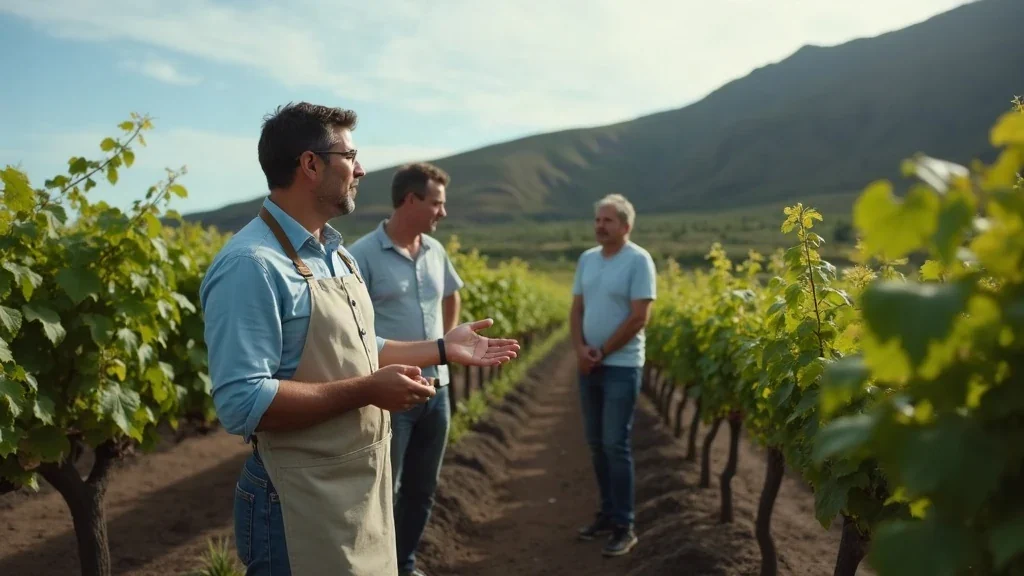
An acknowledgment that smells of volcanic soil, high-altitude wine, and the work of the people who make it all possible…