













When Selling More Becomes a Problem
You start by selling through your website. Then you sign up with an OTA. Later, another platform comes along that “works really well in your destination.” Suddenly, you have bookings coming in through various sites, different calendars, and the constant feeling that something might slip through the cracks. And usually, something does slip through the cracks: an overbooking, a blocked room that doesn’t sell, or a cancellation you didn’t update in time.
This is one of the most common problems for small and medium-sized tourism businesses in Spain. And it almost always stems from the same root cause: not having a well-integrated Channel Manager.
What Is a Channel Manager
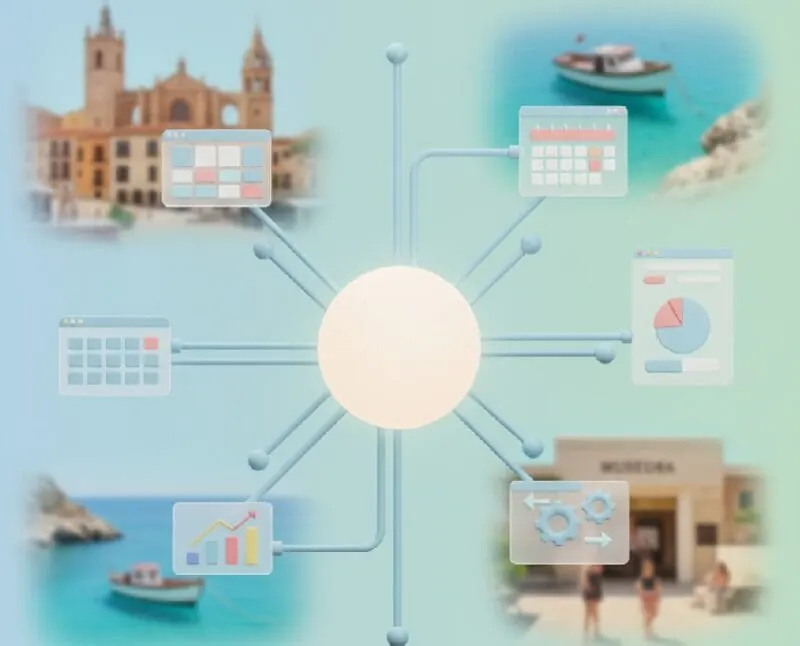
A Channel Manager is a system that automatically synchronizes your availability across all the channels where you sell.
Every time a booking comes in through one channel—your website, an OTA, or a partner agency—the system updates availability across the rest. No phone calls, no Excel spreadsheets, no last-minute calendar checks.
The idea is simple: one set of availability, multiple connected channels.
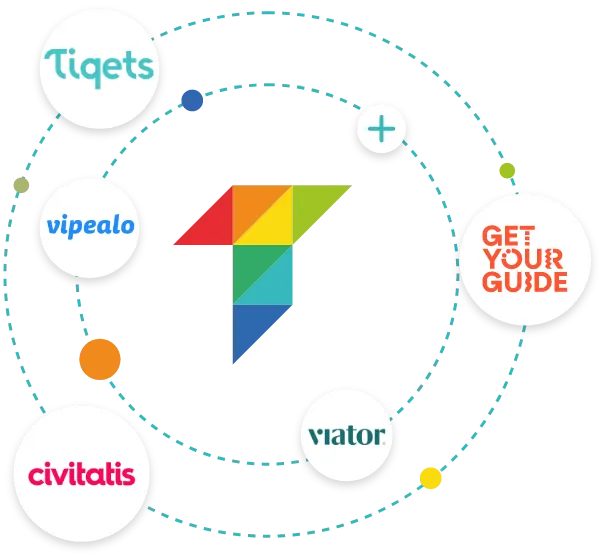 TuriTop
Why It’s So Important for Tour Operators
Selling across multiple channels isn’t the problem. The problem is managing them manually. When there’s no automatic synchronization, three very specific things happen:
- You waste time checking calendars and confirming bookings
- You lose sales because you block availability “just in case”
- You lose money when an overbooking occurs and you have to refund or rebook customers
A good Channel Manager prevents these situations because it works in real time. It doesn’t interpret, it doesn’t wait, and it doesn’t depend on someone “remembering.”
In destinations with high seasonality—which are very common in Spain—this makes the difference between a controlled operation and daily chaos.
How It Works in Practice
Imagine a tour with 20 spots available for Saturday.
- A customer books 4 spots on your website
- The system automatically reduces availability to 16 spots on all other channels
- Another booking comes in from an OTA for 6 spots
- The remaining channels are updated to show 10 available spots
Everything happens without manual intervention.
The key is that the Channel Manager is not a standalone tool; rather, it must be connected to the booking engine and the quota management system. Otherwise, synchronization fails.
That’s why, when the Channel Manager is integrated into the booking system itself, you have much greater control.
Real-life examples from day-to-day operations
A free walking tour in Seville that sells through its website and two external platforms. During peak season, a large last-minute booking comes in and leaves no spots available for another previously confirmed booking.
Or a water sports company in Mallorca that blocks spots “for security reasons” on an OTA and then ends up with empty slots it can no longer sell.
These are common and avoidable situations. The problem isn’t demand. It’s a lack of synchronization.
Common Mistakes When Managing Multiple Channels
The first is relying on memory or manual updates. It works… until it doesn’t.
Another common mistake is using separate tools: a calendar on one side, a booking engine on the other, and spreadsheets to “keep track.” The more layers, the greater the risk of error.
It’s also common to think that a Channel Manager is only for large companies. In reality, the fewer resources you have, the more you need it. Automation prevents growth from becoming a problem.
What a Good Channel Manager Should Offer
Without getting into technical lists, there are some clear principles. A well-designed system should allow you to:
- Have a single source of truth for your availability
- Synchronize in real time, without delays
- Prevent overbooking without unnecessarily blocking sales
- Integrate seamlessly with your booking engine
If you also work with multiple platforms, the key is that you shouldn’t have to “monitor” the system. It should run on its own.
The Connection to Financial Control and Operations
Although the Channel Manager is primarily associated with availability, in practice it affects all aspects of management.
When bookings are centralized, so are payments, cancellations, and reports. You don’t have to check whether a sold room was already paid for or if there are discrepancies between channels.
A well-integrated system gives you real visibility into what’s coming in and what’s still available—without unnecessary intermediaries or surprises at the end of the month.
A Key Component for Growth Without Losing Control
Selling on more channels should mean more opportunities, not more stress. The Channel Manager is what enables that balance. It’s not about selling everywhere, but about doing so with control. And in tourism, where margins and time are limited, automation isn’t a luxury—it’s an operational necessity.
When availability is synchronized, business runs more smoothly. And you can focus on what really matters: delivering great experiences and filling rooms without complicating your life.
An acknowledgment that smells of volcanic soil, high-altitude wine, and the hard work of the people who make it all possible…