





Most tourism businesses in Spain don’t fail due to a lack of demand
Local guides, agencies, and tour operators are gaining more and more visibility through their own websites, OTAs, social media, and partnerships with hotels or tourism offices.
The problem usually lies elsewhere—in how bookings, payments, and availability are managed when a business starts operating across multiple channels at once.
That’s where many systems fail to align with the day-to-day reality of a Spanish tourism operator.
What It Really Means to Have a Good Booking Engine
A booking engine shouldn’t complicate operations or become just another middleman.
In practice, it should help you with three very specific things:
- Manage your bookings without manual effort
- Collect payments clearly and directly
- Avoid errors that lead to overbooking or financial loss
Everything else is secondary.
Why the Spanish context matters (a lot)
Spain is not a generic market. It has very distinct characteristics:
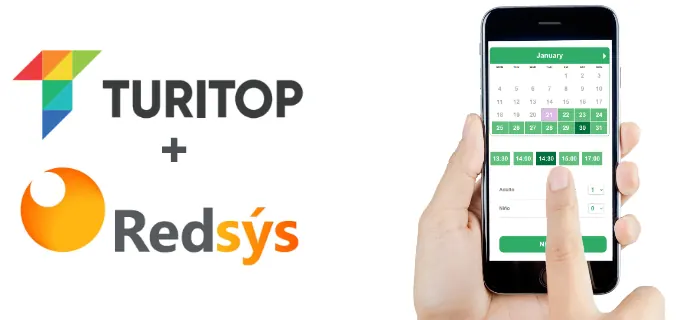
- Widespread use of Redsys and Bizum
- Small or medium-sized businesses with highly operational management
- Busy seasons, demand spikes, and small teams
- Need for quick support in Spanish, not endless support tickets in English
When a system isn’t designed for this context, the operator ends up adapting to the software… instead of the other way around.
How a booking engine should work on a day-to-day basis
Money should go into your account—not get lost along the way
One of the biggest pain points for many operators is not having real visibility into their cash flow.
A well-designed booking engine should allow you to collect payment directly from the customer, without intermediaries that withhold payments or complicate reconciliation.
This not only improves cash flow.
It also reduces accounting errors and dependence on third parties.
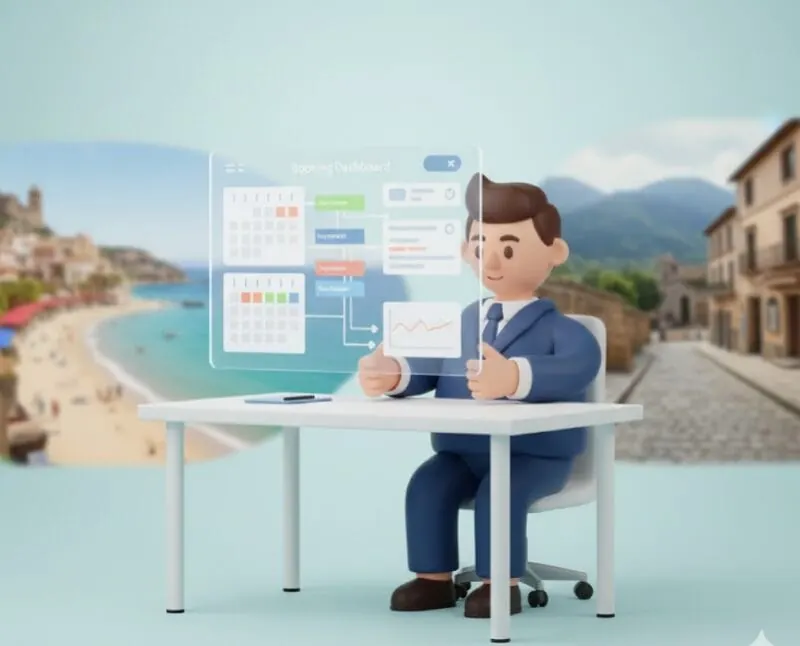
 Booking engine
Availability Can’t Be Managed Manually
When you sell on your website, through OTAs, and perhaps at physical locations, availability must sync automatically.
Doing it manually works… until it stops working.
And when it fails, the result is usually the same: overbooking, awkward phone calls, and a loss of customer trust.
The key is to have a system that centralizes room availability and updates it across all channels in real time.
Commissions Matter More Than They Seem
Many operators accept high commissions because “that’s just how it’s always been.”
But when you add up:
-
the booking engine’s commission
-
the payment gateway’s commission
-
the OTA’s commission
the margin shrinks much more than it appears on paper.
A good booking engine should work with competitive payment rates, especially in a market as price-sensitive as the tourism industry.
Common Mistakes When Choosing a Booking Engine
Choosing the best-known option without analyzing whether it fits your operations
Accepting payment intermediation without assessing the real impact
Not thinking about support until a problem arises
Managing availability as if there were only one sales channel
Most of these mistakes aren’t noticeable in the first month.
They become apparent when the business grows or enters the high season.
Where TuriTop Fits Into All This
When analyzing what tourism businesses in Spain really need, the conclusion is usually clear.
A booking engine should:
-
allow you to collect payments directly, without intermediaries
-
work with payment gateways commonly used in Spain, at reasonable costs
-
effortlessly synchronize availability across multiple channels
-
offer support in Spanish, when it’s truly needed
TuriTop fits this approach because it’s designed with the actual operations of local businesses in mind—not based on a generic model for large international markets.
It’s not about having more features.
It’s about having the right ones for your day-to-day operations.
Choosing the right booking engine is an operational decision, not a technological one
A booking engine shouldn’t feel like “just another platform.”
It should be a tool that lightens your workload, gives you control, and allows you to focus on selling and operating more effectively.
In the context of tourism in Spain, choosing a system aligned with that reality makes a much bigger difference than it seems at first.
A recognition that smells of volcanic soil, high-altitude wine, and the work of the people who make it all possible…